
NEW RESEARCH CONFIRMS COMPOUNDED BIOIDENTICAL HRT IMPROVES QUALITY OF LIFE AND REDUCES MENOPAUSAL SYMPTOMS
HomeBlogLevitas Group
Levitas Group

NEW RESEARCH CONFIRMS COMPOUNDED BIOIDENTICAL HRT IMPROVES QUALITY OF LIFE AND REDUCES MENOPAUSAL SYMPTOMS

Levitas Group
1 October 2020
3 min read

New research on the benefits of BHRT from the Marion Gluck Clinic has been published in the peer-reviewed Journal of Prescribing Practice. Read the full research paper here.

The research was carried out by Dr Vera Martins, Nick Legroux, Dr Monica Lascar, and Dr Marion Gluck of the Marion Gluck Clinic. The data provides clinical evidence that bioidentical hormone replacement therapy – performed according to the Marion Gluck Clinic clinical guidelines – not only improves quality of life but reduces menopause-associated symptoms in women.

Our research looked at menopause patients who were prescribed personalised levels of various bioidentical hormones (for example, estradiol, progesterone and DHEA) according to their individual needs.

You can read more about BHRT and find out how bioidentical hormones are different here.

What Were The Results Of The Research?

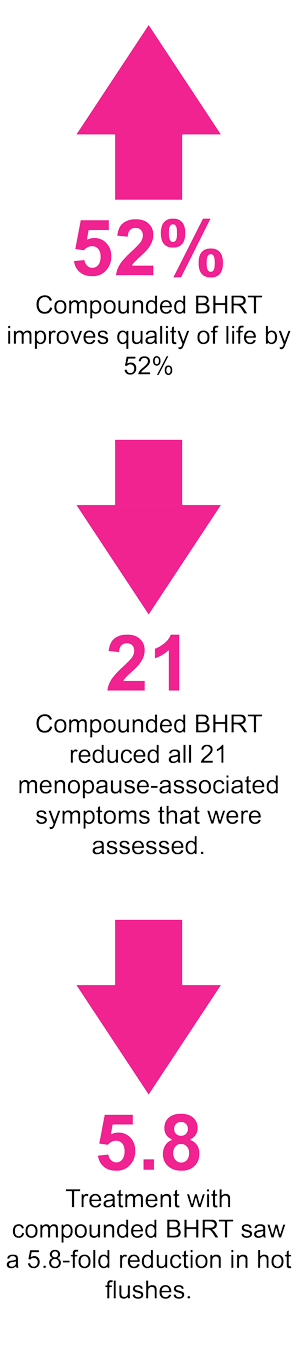
The research showed a 52% improvement in quality of life as a result of hormone balancing using compounded bioidentical hormones.

21 menopause-related symptoms were assessed and were all significantly reduced after patients began compounded BHRT.

The improvement in some of these symptoms was very significant:

  • Sweating at night improved in 75% of patients
  • Feeling tense and nervous improved in 74% of patients
  • Difficulty in sleeping improved in 64% of patients
  • Irritability improved in 63% of patients
  • Feeling tired and lacking energy improved in 53% of patients
  • Loss of interest in sex improved in 47% of patients

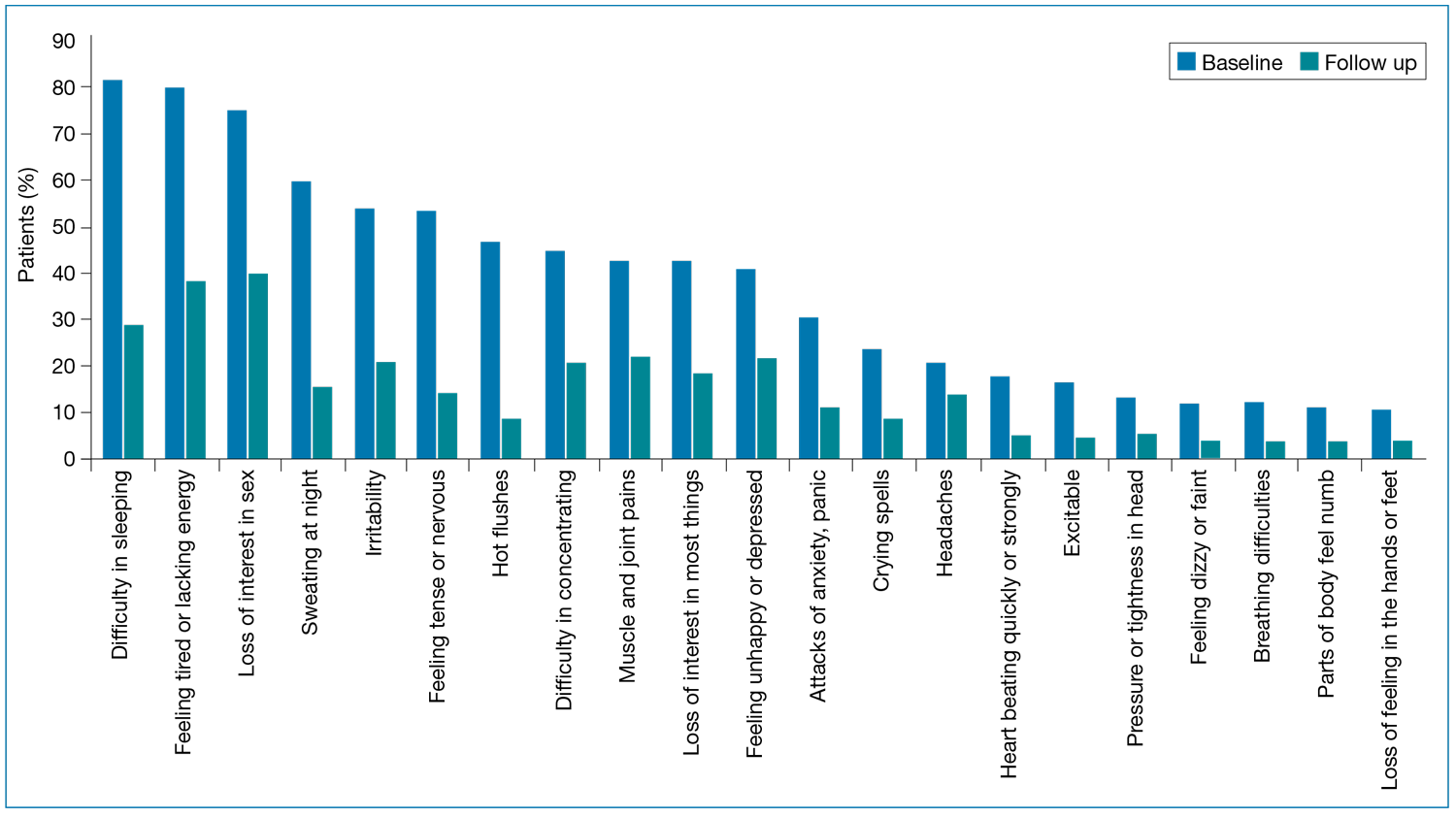
All other symptoms assessed also reduced upon treatment. Below is a diagram that shows how each of the menopause symptoms reduced after BHRT.
New Research Confirms Compounded Bioidentical HRT Improves Quality Of Life And Reduces Menopausal Symptoms

Changes in menopausal symptoms before and after BHRT. Bar chart expressing the percentage (%) of patients experiencing individual symptoms at the top 2 categories of the Likert scale (2 – Quite a bit and 3 – Extremely) before (baseline) and after BHRT treatment (follow-up). The 21 symptoms from the Greene Climacteric Scale are shown by order of prevalence. Baseline = before BHRT treatment, Follow-up = after BHRT treatment.

Our study used the Greene Climacteric Scale. This is a standardised quality of life questionnaire specific to menopausal symptoms. It is well established, validated and allows for comparison of data across different studies.

The result of our research supports not only what we already know due to our experience with thousands of women, but the outcomes of other small-scale physiological studies (Fitzpatrick et al. 2000; Simon et al. 2019; Leonetti et al. 1999; Ruiz et al. 2011).

When we look at the data from other studies, we can see that patients using bioidentical hormones have fewer side effects than those using non-bioidentical hormones, lower risk of breast cancer and cardiovascular disease (Fournier et al, 2005; Fournier et al, 2007; Holtorf, 2009).

What Does The Future Hold For BHRT?

At Marion Gluck Clinic we are on a mission to educate and empower people to take control of their hormonal wellbeing.

There is some controversy over whether compounded bioidentical hormones are safer and more effective than their non-bioidentical counterparts. But, our experience of successfully treating thousands of patients at the Marion Gluck Clinic has given us confidence that BHRT is a safe and effective option for many women. The results of this study further confirm what we have experienced first hand over the last 10 years.

Levitas Clinic Guildford is proud to be in partnership with the Marion Gluck Clinic. Our doctors attend Marion Gluck’s academy to receive training in line with ground breaking research as above.

Speak With One Of Our Doctors About BHRT For Menopause Symptoms

Take control of your menopause symptoms. Speak with one of our specialist doctors for a personalised BHRT treatment plan which is tailored to help you achieve optimal hormone balance and improve quality of life.

Contact Us


Ready to Optimise Your Health?

Speak with the Levitas team to find the right service for you.

Get in Touch

More Articles

Related Posts

Male Testosterone
Hormones & Menopause
6 August 20261 min read

Male Testosterone

Read Article
Transforming Obesity Care: Advances in Metabolic Medicine at Levitas: Clinics in London and Surrey
Hormones & Menopause
8 October 20251 min read

Transforming Obesity Care: Advances in Metabolic Medicine at Levitas: Clinics in London and Surrey

Leading Clinics in Precision and responsible weight loss services with Internationa recognition At Levitas Clinics, we are redefining obesity and metabolic health across the UK. With leading locations in Mayfair and Knightsbridge (The HVN Clinic) and advanced centres in Esher and Guildford, Surrey, we deliver a new era of science-led, regenerative weight management. Our mission is clear: to move beyond calorie counting and restriction—to restore metabolic harmony through precision medicine, fasting science, and cellular renewal. 1. The Levitas Clinics Difference – Beyond Traditional Weight Loss Obesity is not simply about diet or exercise; it’s a metabolic and hormonal condition driven by inflammation, insulin resistance, and cellular fatigue. At Levitas Clinics, our approach is rooted in functional and regenerative medicine, treating the cause rather than the symptom. Each patient begins with advanced metabolic testing—measuring insulin, thyroid, cortisol, and liver function—to design a personalised restoration plan. Our integrated care includes: Functional nutrition programmes – fasting-mimicking, ketogenic, and anti-inflammatory protocols Hormone optimisation – rebalancing testosterone, oestrogen, DHEA, and thyroid health Micronutrient restoration – replenishing cellular cofactors for sustained energy Lifestyle and sleep recalibration – addressing stress, circadian rhythm, and behavioural drivers This comprehensive model builds the foundation for true metabolic transformation, improved vitality, and […]

Read Article
Hunger Isn’t Just in Your Head — It’s in Your Hormones
Hormones & Menopause
10 June 20253 min read

Hunger Isn’t Just in Your Head — It’s in Your Hormones

Levitas Hormones for Life When people think of hunger, they often blame a lack of willpower. But what if hunger isn’t just a mental game? What if the real driver is hormonal biology — specifically, a hormone called ghrelin?Meet Ghrelin: The “Hunger Hormone” Ghrelin is produced primarily in the stomach and plays a powerful role in regulating your appetite. When your stomach is empty, ghrelin levels rise and send a signal to your brain that it’s time to eat. Once you’ve eaten, ghrelin levels fall — or at least, that’s what’s supposed to happen. But here’s the twist: not all foods affect ghrelin the same way. In fact, the type of macronutrients you consume — protein, carbs, and fats — can dramatically impact how hungry you feel later.Macronutrients & Ghrelin: What Science Tells Us Let’s explore how each major food group influences ghrelin, and by extension, your hunger patterns and weight goals.Protein — The Ghrelin Slayer Most effective at reducing ghrelin levels. Promotes a long-lasting feeling of fullness. Supports appetite control, making it a top choice for sustainable weight management. Protein-rich meals lead to longer satiety and reduced food intake throughout the day. Think eggs, lean meats, legumes, and high-quality […]

Read Article